
Ski touring
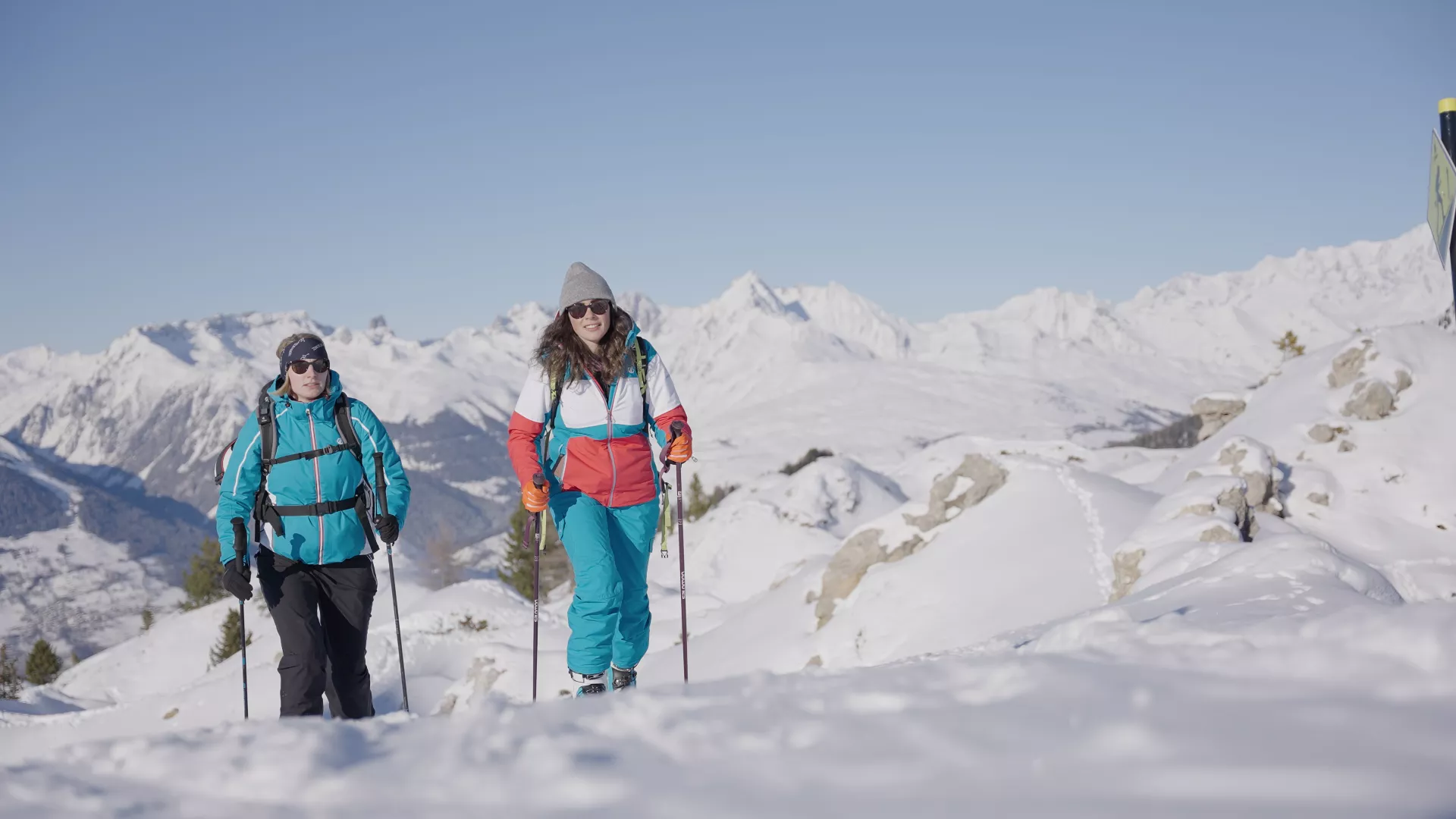
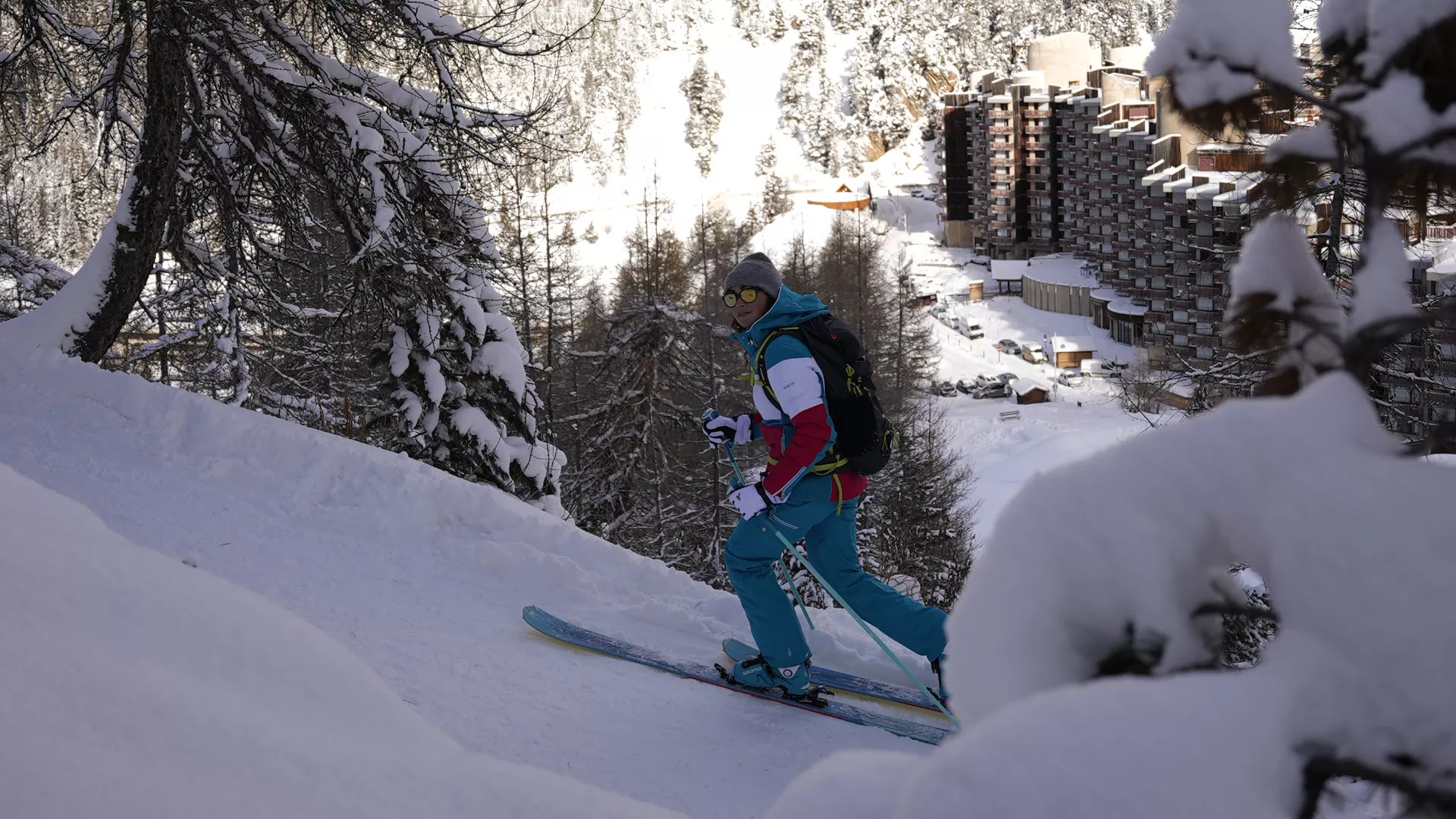
La Plagne is the Eden for all skiers, we did say all. The backcountry skiing is an integral part of our offering. You know, skiing with "skins"... with 0% seal content, we're not savages! This practice allows you to discover another aspect of skiing, gentler, slower, quieter. To embark with complete peace of mind, the trails are marked and the descent uses the slopes. A free guidebook is available at the info points to best prepare for your outing. Come experience the backcountry skiing in Tarentaise !
Have you ever... skied uphill?
It is certainly the sensation that surprises the most the first time you put on backcountry skis: finding yourself facing the summit... and yet not sliding backward! One slip, then two, then three: little by little, you ascend the slope (in the literal sense), without fearing to skid. You were an alpine skier, and now you are a hiker.
A change of perspective that allows you to (re)discover certain landscapes that you were used to having behind you on the groomed slopes.To defy the laws of gravity.To explore these secret facets of the La Plagne territory and its villages, invisible from the ski area and the lifts.
Slow down: (almost) nothing is urgent in backcountry skiing
Backcountry skiing is the quintessential contemplative activity throughout the winter. Taking your time? It's impossible to do otherwise when the slope gets steep and your breath is short. The terrain softens? Instead of speeding up, you might almost be tempted to slow down even more to "catch your breath" (and marvel with your companions of the day at the landscapes that unfold along the way).
On a ski tour, you don't rush: you plan. To leave at the right time (to also arrive at the right time, when the snow conditions are the best and safest). To keep a little extra time (in case you want to extend the break at the refuge). To stop (to fill your smartphone gallery with memories, beauty, and laughter).
Explore wild landscapes, far from the hustle and bustle of the resort
Do you prefer the snow untracked? Thanks to ski touring, access fabulous descents in preserved off-piste areas, far from the ski lifts. Leave your (discreet) mark in wild valleys, in the heart of the Vanoise National Park. Listen closely: what do you hear? Nothing? That's normal! The resort is far away (but close enough to be back in time for the evening fondue, don't worry).
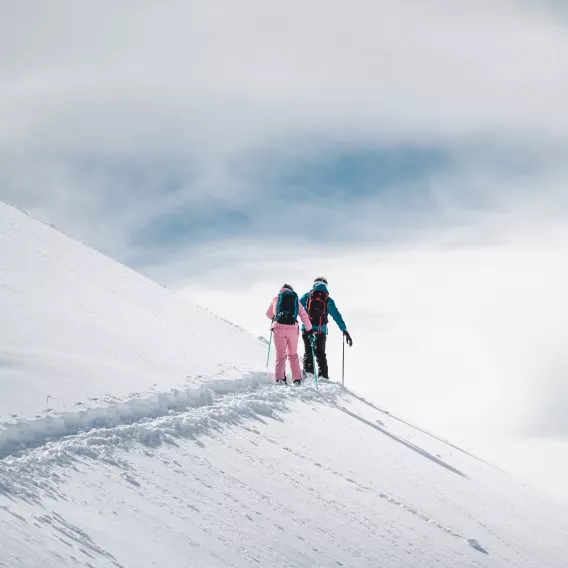
Did you think that ski touring was reserved for intrepid skiers, eager to embark on adventures in yet unexplored areas? Think again! Thanks to the marked and secure routes, all skiers (from the blue run level in alpine skiing) can wander off the beaten path (or rather: off the groomed slopes).
Here’s the overview (of the routes): 7 marked circuits, three levels of difficulty (easy, intermediate, and difficult), from 3.5 km to 6 km, with a positive elevation gain of 350 m to 930 m, starting from Plagne Bellecôte, Plagne Centre, La Roche, Plagne Montalbert, Montchavin, Les Coches, and Champagny-en-Vanoise.
Download the ski touring overview in pdf format, or check the details of the routes.
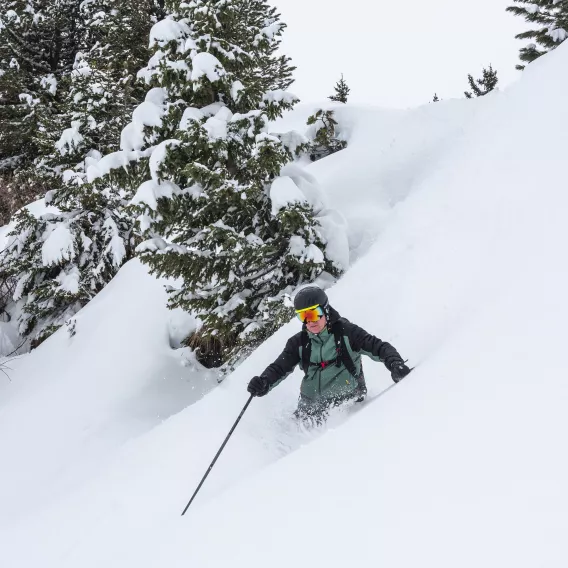
Gone are the days when backcountry skiing was only practiced in the spring. Now, backcountry skiing is done throughout the winter season, from the first snowfall to the last flakes.
The marked trails are open (therefore secured, and even partially groomed for a handful of them) during the same period as the alpine ski area: from mid-December to mid-April, depending on snow conditions.
But backcountry skiing in its wilder version, outside the secured ski area, easily frees itself from opening dates of the rest of the resort! Want to "put on the skins" earlier or later, depending on early or late snowfall? Call on a high mountain guide to take you to high altitudes, to secret corners, untouched by any trace!
Do you have the level to go backcountry skiing? Take the test!
Backcountry skiing requires various physical and technical qualities, both uphill and downhill. Here are three questions to help you choose a route that suits your level:
- ☑️ Do you know how to ski on a blue run in alpine skiing? If the answer is yes, move on to the second question! Otherwise, we recommend that you first get acquainted with alpine skiing on beginner areas and take a few sliding lessons until you feel comfortable on a blue run. Yes, backcountry skiing is not just about going uphill: in the end, you have to come back down!
- ☑️ Do you know how to ski in all snow conditions (including off-piste) ? If the answer is yes, move on to the third question! Otherwise, the marked ski touring routes are made for you: you will be able to stroll safely uphill, then descend via the alpine ski slopes (almost exclusively blue runs)
- ☑️ Do you know the basics of off-piste safety? Choosing your route wisely, reading the BRA (Avalanche Risk Bulletin), using a DVA (Avalanche Victim Detector) etc. If the answer is yes, you will love exploring the most hidden corners of the Vanoise National Park! Otherwise, why not hire a high mountain guide to discover these wild spaces safely?
Did you know? At high altitude, breath often comes to fail during exertion, especially when you are used to living in the plains. Give yourself a little time to adapt and always start with a route with little elevation gain to test yourself.
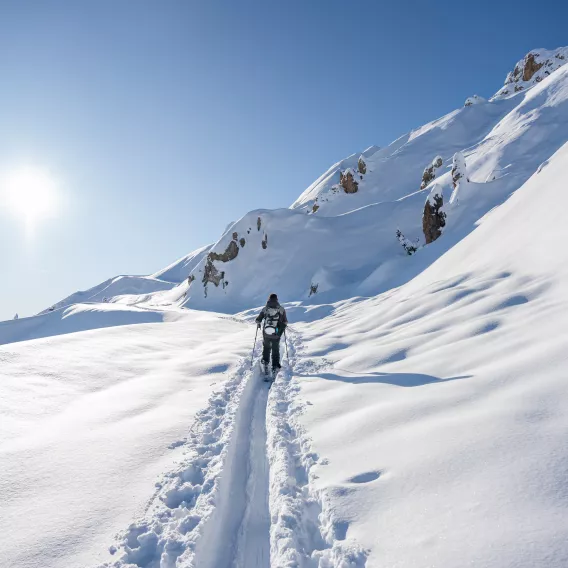
3 easy route ideas to get started with ski touring
Do you know how to ski on blue runs in alpine skiing? You can try ski touring! Here are three easy level route ideas to test your equipment with confidence (without having to dread the transitions):
- Plagne Bellecôte > Col de Forcle (5 km | 350 m of positive elevation gain). A route that alternates between groomed sections and secure off-piste, with a stunning view of Mont Blanc.
- Plagne Centre > Col de Forcle (4 km | 350 m of positive elevation gain). This variant of the first route promises the same view of the peaks at the finish, but a different start to vary the pleasures throughout the week.
- Les Coches > Plan Bois (3.7 km | 390 m of positive elevation gain). For a lovely walk in the forest between 1440 m and 1820 m in altitude.
Rent your equipment to get started with ski touring at a low price
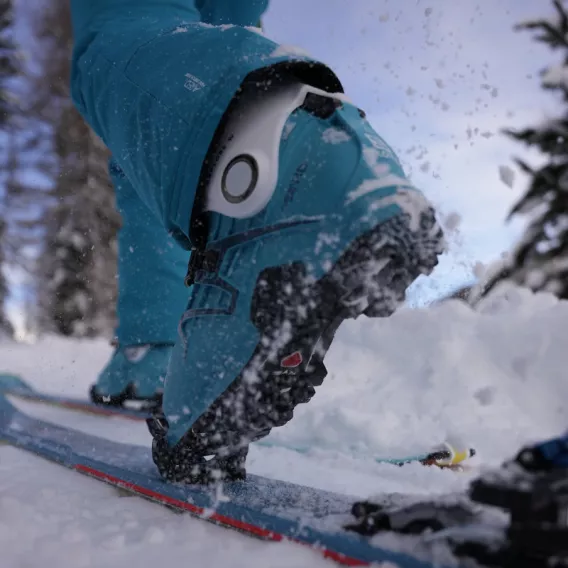
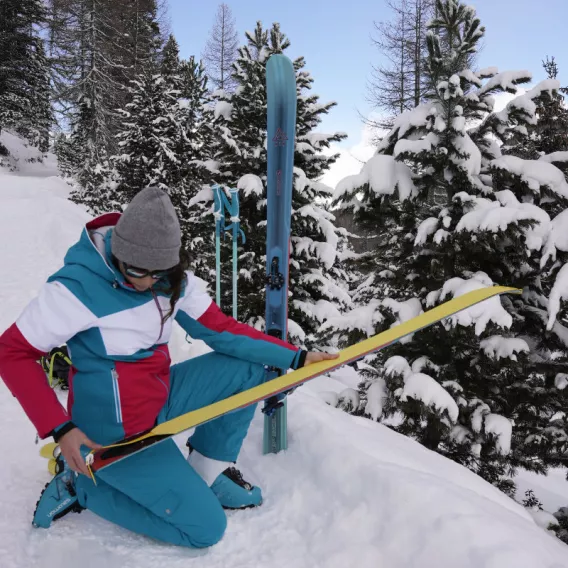
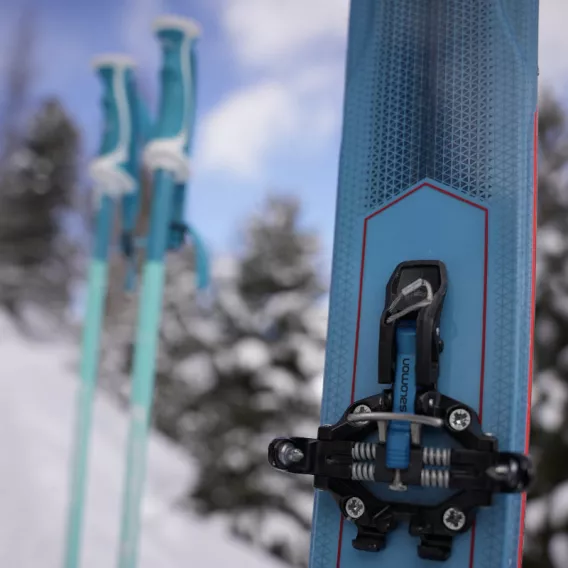
Backcountry skiing requires specific equipment that is more expensive than alpine skiing gear: lightweight skis with bindings suitable for both ascent and descent, lightweight ski boots with a ski mode and a walk mode, climbing skins, and possibly safety equipment if you go off-piste (beacon, shovel, probe, airbag backpack…).
The good idea to test the activity cheaply before investing? Rental ! Don't hesitate to ask the salesperson for advice in the store: they will guide you towards the equipment that will give you the most enjoyment during your outing (more or less lightweight, more or less technical, etc.) and will show you how to use it.
The comfort + safety checklist for well-equipped backcountry skiers
Backcountry skiing requires specific equipment, whether you practice it on marked trails or more wild ones:
- Backcountry skis (or a splitboard for snowboarders), with specific bindings that will allow you to free your heel while ascending and secure it while descending. Depending on the binding models, you can use one or more risers to elevate your heel on steep slopes (thus preserving your calves)
- Climbing skins, which are textile strips to stick under your tips while ascending. It is thanks to them that you can climb without sliding backward
- Ski poles, possibly telescopic
- Breathable and lightweight clothing (multiple layers that you can possibly pack in your backpack on the way up and then put back on the way down depending on the temperature and the intensity of your effort)
- With experience, you will learn to adjust your accessories (for example: sunglasses on the way up and goggles on the way down, small sports gloves on the way up and mittens on the way down, headband on the way up and beanie on the way down, etc.)
- Remember to attach your helmet to your backpack: you will be glad to find it when it's time to go back down
- You decided to hike off the marked trails? Don't forget your essential safety trio: the shovel, the probe, and the DVA (Avalanche Victim Detector), as well as an ideally
- airbag backpack. And to regain your strength: something to snack on, drink a hot tea...
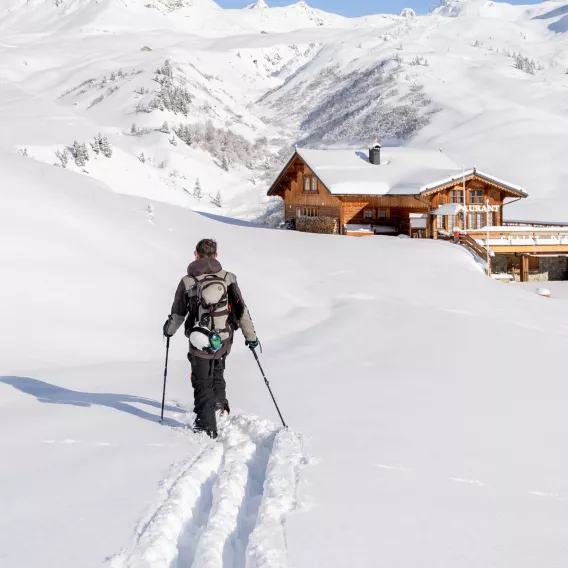
No need for a pass to go ski touring!
On a ski touring trip, the ascent is done using the strength of your thighs and calves, without using the ski lifts. Therefore, you do not need to buy a ski pass: access to marked trails is free, just like access to unmarked off-piste routes (including those that cross the Vanoise National Park, which you can traverse without having to pay any entrance fee).
Good to know: you also won't need a ski pass if you decide to come down via the groomed slopes of the alpine ski area.
Shift into challenger mode
You've done it! You've mastered the art of ski touring. Now it's time to take the start of one of the ski touring races organized by La Plagne. Four events, four formats, there's something for everyone. And if you manage to complete all four races, we'll give you a surprise worthy of the greatest challengers!
- Combe Bénite ski mountaineering - Montalbert and Granier: January
- Triface - Plagne Centre: March
- Les Diables Bleus - La Plagne Montchavin les coches: March
Cross-country skiing or backcountry skiing: how to choose?
Cross-country skiing and backcountry skiing share one thing in common: they both get your heart rate up! Aside from that, everything differs: the equipment, the terrain, the technique…
Cross-country skiing is necessarily practiced on groomed trails on Champagny le Haut, and the Nordic and leisure areas of the Versant du Soleil (or in tracks), flat or slightly hilly, with long, thin, pointed skis without edges. You will need to push on your skis to move forward and gain speed, either like a skater (this is called skating), or in a traditional manner with an alternating step in the famous tracks.
On backcountry skis, no groomed trails (or very few): only more or less wild routes, sometimes marked and sometimes not, and they can have significant elevation changes (with beautiful climbs... leading to beautiful descents!). To ascend without sliding backward, you will need to attach a textile strip resembling velvet under your skis (these are called "skins," referring to the first skins used in the 1930s, made with authentic seal fur). You will remove them before descending off-piste or via alpine ski trails.
To summarize (very roughly): you will enjoy cross-country skiing if you want to exert yourself in a relatively small area; you will prefer ski touring if you are looking to take a nice walk at your own pace.
Both disciplines require specific equipment (it's impossible to do cross-country skiing or ski touring with your alpine skis), which you can rent during your vacation.
Ski touring: the favorite winter activity of trail runners
When hiking trails are covered in snow, trail enthusiasts often trade their sneakers for backcountry skis. And for good reason: these two disciplines are almost cousins!
In both cases, you work on your cardio, in both cases, you traverse stunning landscapes, in both cases, you can boost your Strava stats with significant elevation gain.
Backcountry skiing? It’s THE solution to “stay in shape” between two seasons of trail ! Why not take the opportunity to pin on a bib for a ski mountaineering race?


