
Historical & religious heritage
Remarkable sites
In the heart of the Tarentaise valley, Savoyard villages are home to a remarkable heritage: from prehistory to the Baroque, via the Gauls and the Romans, heritage and culture are the order of the day! A number of sites bear witness to the region's rich historical past. They invite you to take a trip back in time to the Neolithic era.
From Plagne Vallée
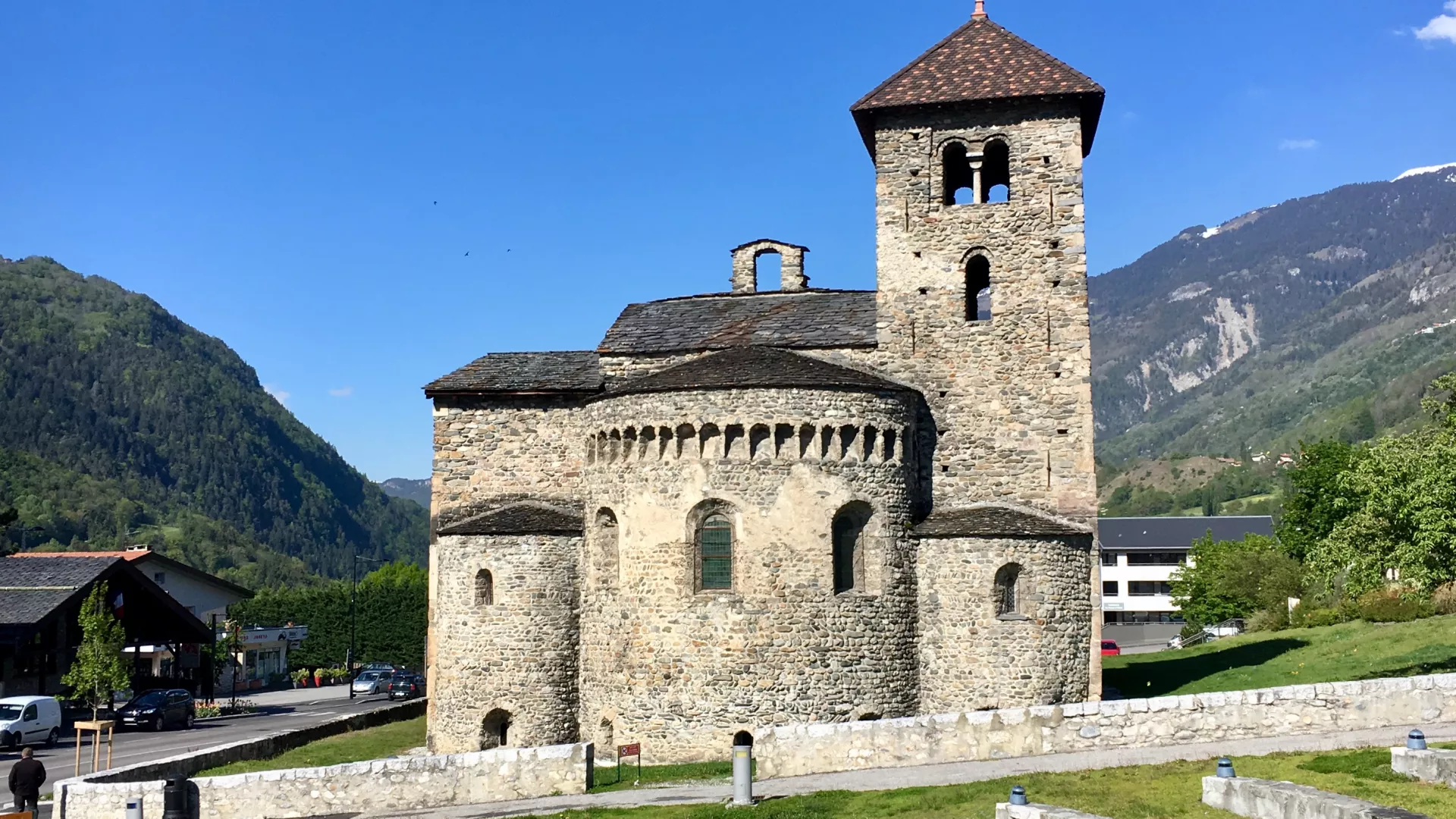
In the heart of the valley, near Aime la Plagne's market square, stands an 11th-century Romanesque basilica. Its usual name is Basilique Saint Martin, but in reality it should be the church of the Prieuré Saint Martin. The latter rests on the foundations of a Roman civil basilica and then a Carolingian church.
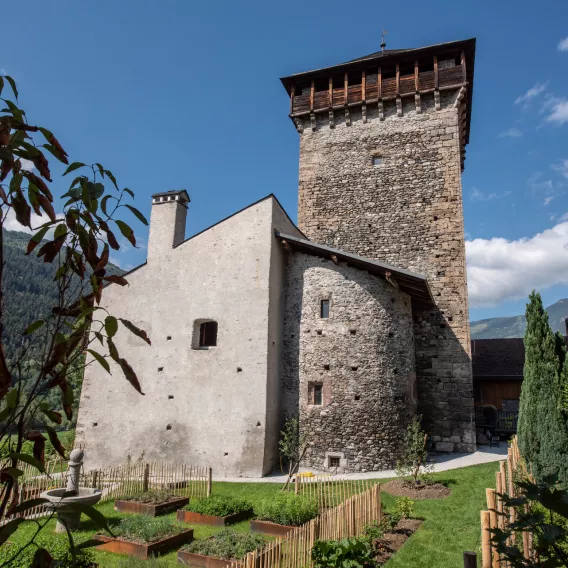
Inside, in the choir, you'll discover frescoes from the 12th/13th century. Don't forget to visit the basement, with its exhibition of engraved stones from Roman times and its mysterious crypt. Not far from the Isère is the Tour Montmayeur, dating from the Middle Ages. Today, it houses an exhibition on the architecture of Tarentaise houses and a reconstruction of a medieval courtroom.
Prehistory, Baroque, Gallo-Roman ...
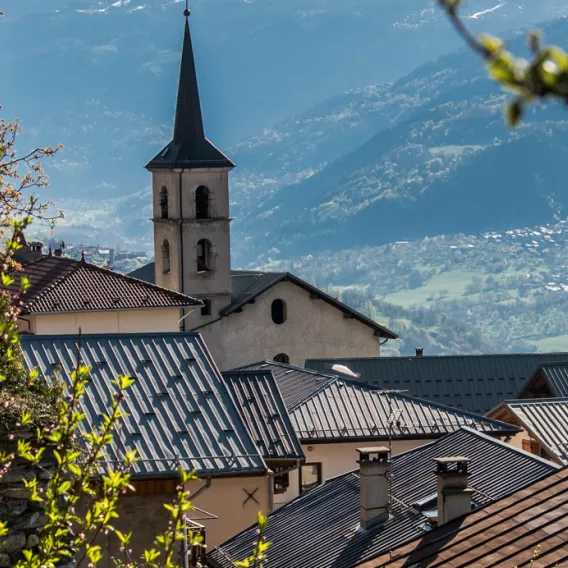
On the heights of the valley, you'll find theEspace archéologique Pierre Borrione: des Pierres et des hommes, in the former mother church of Aime. This Musée de France exhibits objects bearing witness to the earliest human occupations in the Tarentaise region: prehistoric tools, funerary furniture, Gallo-Roman architecture, jewelry, ceramics, coins... This space bears the name of its founder and patron, Pierre Borrione, doctor and mayor of Aime. This enthusiast was keen to preserve the many relics of his town's, and indeed the valley's, past on site. From this promontory, admire the view and the bell tower of the parish church. Dedicated to the Nativity of the Virgin, it was built between 1675 and 1678. It features all the hallmarks ofBaroque art. Outside, note the 3 sundials on the south and east sides.
The Aime coast
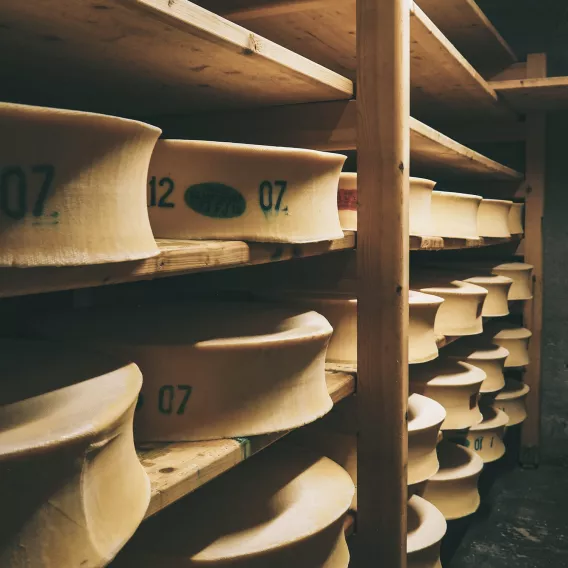
Push open the door to the School of yesteryear. In the reconstructed classroom, sit on a school bench and leaf through the exercise books or pick up a pen. The village dairy ceased operations in 1970. A museum brings together objects linked to cheese and the mountain pastures. Its store sells local products: cheeses, crozets, jams and handicrafts...
From Montméry to Valezan
Montméry is a typical village on the Tarentaise adret. At the dairy, admire the large copper cauldron used to make Beaufort, and the notebooks used to record the weight of milk delivered. Watch a film on the making of Beaufort, with commentary by the last cheese-maker to have worked on the premises. Push open the door of the Maison de Joannès, and you're transported back to the last century. This enthusiastic resident has recreated an old-fashioned dwelling where cattle and men lived side by side. Here, he displays objects that influenced his childhood, and that of his parents and grandparents. Continue your visit to Valezan, where the church of St François de Salles (early 18th c.) houses a large altarpiece featuring a gilded wooden tabernacle.
Maison du Patrimoine | Plagne Centre
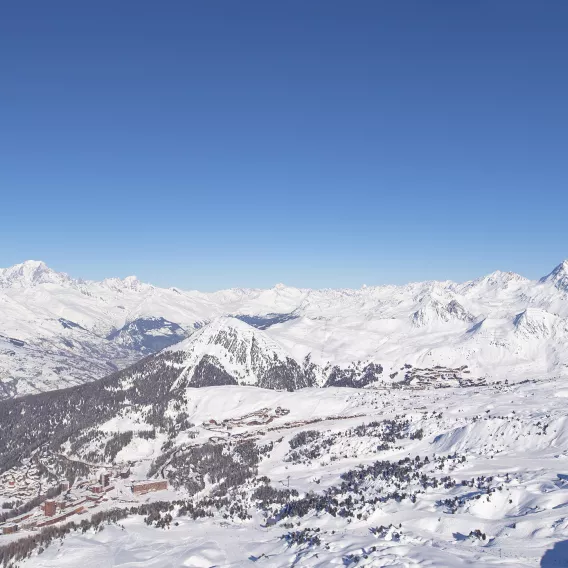
At the heart of the Espace Pierra Menta at Plagne Centre, the Maison du Patrimoine unveils the history of La Plagne. Three permanent exhibitions trace the history of the La Plagne mines, bobsleigh and the resort itself. Did you know that bobsleigh was played on the road by mining communities, before the creation of the track that hosted the 1992 Olympics? Through period photos, relive the creation of the various La Plagne sites, from stage to stage.
A rich religious heritage
Take advantage of your peregrinations in La Plagne Vallée and its slopes to push open the doors of the many churches and chapels.

Above Centron, Saint-Laurent’s church watches over the village of Montgirod. It survived a fire in 1944, started by German troops. Saint-Laurent is celebrated in August every year. Before you go back down to the valley, make a detour to Villaret to visit its chapel dedicated to St. John the Baptist. At 720 m, it shelters a surprising altarpiece covered with baroque ornamentation. Take the time to discover the angel’s face that is plump on one side and skeletal on the other, or the seraphim with 3 pairs of wings. The most original chapel is in the hamlet of La Combe, on the mountainside above Villette. It is dedicated to St Guérin and has no cross. The small building with a slate roof has walls that are open on two sides. The highly original tabernacle (the stump of a larch tree decorated with stones cemented to it) encloses a small clay statue of a shepherd.
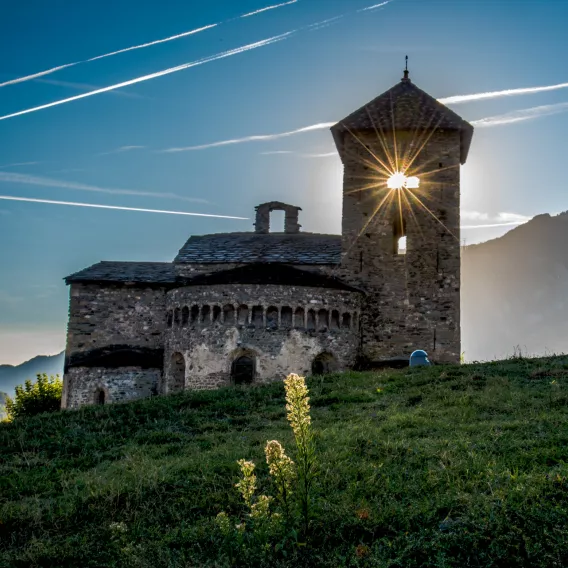
Just a few turns above Aime la Plagne, Villaroland was an important hamlet with its own chapel. With its rare medieval architecture, Saint Eustache’s chapel has remarkable frescos that were restored in the 15th century.
Baroque paths
Les Chemins du baroque ® was inaugurated in 1992, as a new form ofcultural tourism itinerary. The route brings together over 90 sites, many of them in the La Plagne area. In the 17th and 18th centuries, the faith of the local people and the talent of local, Piedmontese and French artists populated the valleys with masterpieces. These creations can be admired in churches, chapels and oratories.
Baroque art emerged at the end of the Renaissance, following the Counter-Reformation launched by the Catholic Church to counter the rise of Protestantism. The Council of Trent (1545-1563) placed art at the heart of the effort to win back souls.
How do you recognize a Baroque building?
Its facade is rather austere, but inside, gold is the dominant feature, with cherubs and twisted columns.
The villages
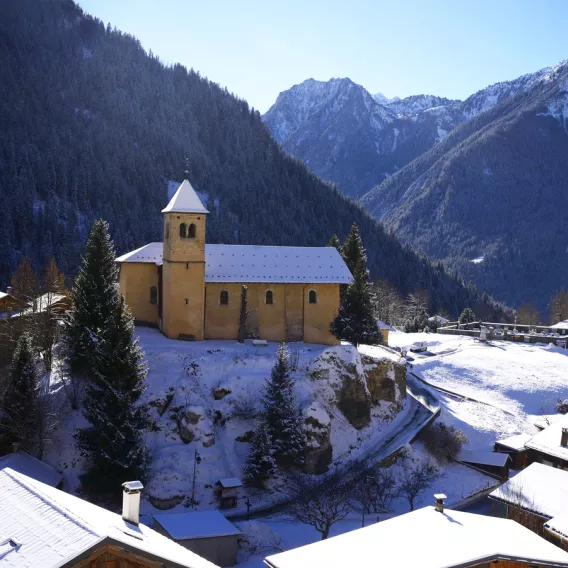
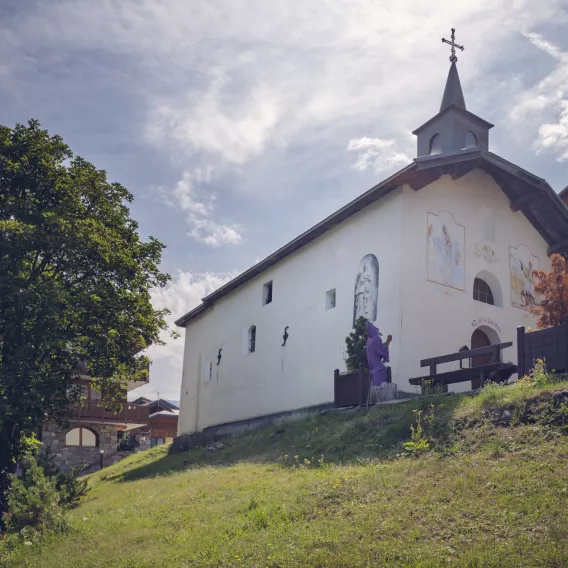
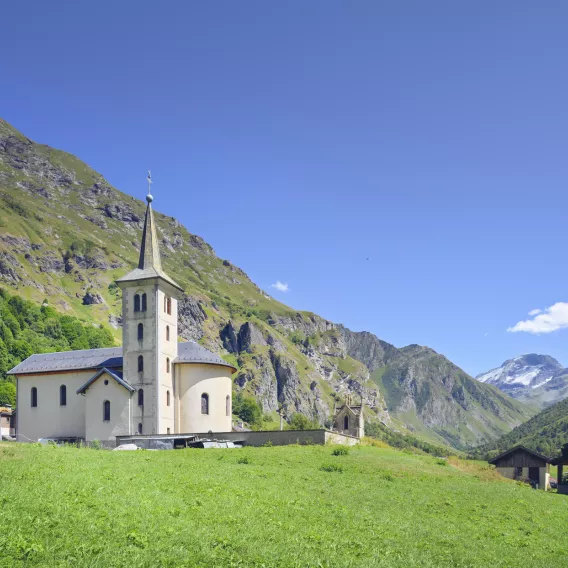
In Longefoy, La Superga chapel was built on a hill in 1853. It is a scale model of the famous Superga sanctuary near Turin. Continue on to Montgésin and its chapel dedicated to Notre Dame des Neiges with rich mural paintings and an ironwork grid that dates back to 1758. A number of elements (including the altarpiece) have been restored by thirty or so volunteers. On the south-facing slope of La Plagne, come and admire St Sigismond’s church in Champagny-en-Vanoise. You can’t miss it with its leaning bell tower, set on an outcrop of gypsum as you come into the village. Inside, you can try to count the gilded cherubs on the tabernacle, there are over a hundred!


