
Multi-day Hike: All Our Tips for Preparing for Your First Mountain Trek

Why not take advantage of your next vacation to plan a multi-day hiking trip in the Alps? Breathtaking scenery, nights in mountain huts, a physical challenge, and rejuvenating self-reflection are all on the agenda for hiking enthusiasts looking for 3-, 4-, or 5-day trips… or even much longer!
The Most Beautiful Multi-Day Hikes in the French Alps
Do you have some time on your hands? Are you looking to take on a physical challenge, or do you need to treat yourself to a moment of introspection in the great outdoors? The French Alps check all the boxes for an exceptional multi-day hike:
- Stunning landscapes featuring the sea, lakes, and mountains;
- Miles and miles of marked trails;
- Endless elevation gain…
Enough to inspire hiking enthusiasts to plan a long-distance trek for their next vacation!
Here are a few ideas for (very) long hikes to add to your “bucket list”:
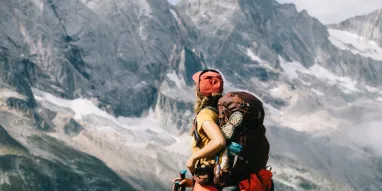
The HexaTrek:
A legendary 3,034-km multi-stage hike connecting 14 of the most beautiful national parks and crossing France from the Vosges to the Pyrenees via the French Alps.
While completing the HexaTrek in one go is a pipe dream for most of us (it would require taking a few months off work…), tackling it stage by stage is much more “doable” (as long as you train a little… or a lot).
Why not start with the second stage, the one that passes near the Versant du Soleil and Champagny-en-Vanoise?
⛰️ Stage 2 (Lake Geneva / Beaufortain / Vanoise): 382 km | 22,500 m of elevation gain | 15 to 30 days
The Great Alpine Crossing:
This multi-day hike connects Lake Geneva to the Mediterranean via the Alpine section of the GR5, passing through two national parks (Vanoise and MercantourNational Parks ), four regional parks (the Bauges, Chartreuse, Queyras, and Préalpes d’Azur parks), and six nature reserves.
⛰️ 620 km | 30,000 m of elevation gain | 36 days
The Grand Tour of Tarentaise
A backpacking trip that traverses the most beautiful mountain ranges of the Tarentaise Valley: the Vanoise, the Beaufortain/Mont Blanc, the Trois Vallées, the Lauzière…
⛰️ 240 km | 18,800 m of elevation gain | 27 days
A multi-day hike in the Vanoise National Park
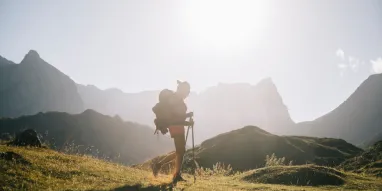
Established in 1963, the Vanoise National Park is France’s very first national park. What makes it special? It’s home to France’s largest ibex colony (about 3,000 individuals), which you can spot with binoculars during your backpacking trip if you know where to look and are a little patient…
The Vanoise National Park in a few key figures:
|
Planning a multi-day backpacking trip in the mountains (stages, logistics, etc.)
The pitfall when planning a multi-day mountain hike for the first time is focusing on distance while overlooking elevation gain.
To help you estimate the physical exertion required for each stage you plan to complete, convert the “actual” kilometers into effort kilometers. How does it work? Add 1 km for every 100 m of elevation gain (for example: a 7-km hike with 650 m of elevation gain corresponds to an effort of 7 km + 6.5 km, or 13.5 km).
Don’t be too “greedy” with effort kilometers (being greedy hurts your feet and back!). With a little practice, you’ll quickly be able to spot the overly ambitious stages of your itinerary and adjust your plan as needed. After all, it’s better to spend one more day in the mountains than to push your limits (at the risk of missing out on the beauty of the scenery).
Pre-hike checklist:
|
Mountain hut or bivouac: where to sleep during your backpacking trip
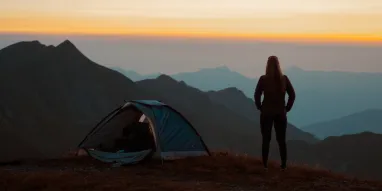
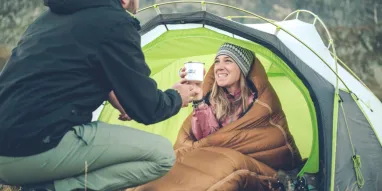
You have two options for sleeping in the mountains during your backpacking trip: in a mountain hut or in a tent (usually at the base of the huts, as camping is highly regulated in France). Can’t decide between the two? Here’s a non-exhaustive list of the pros and cons of these two types of outdoor accommodations.
| Advantages | Drawbacks | |
|---|---|---|
| Mountain Hut | Lightweight backpack: You won’t have to carry much (if anything) if you choose to stay at a mountain hut on a half-board basis. Duvets and pillows are provided for the night (just bring a sleeping bag liner—or a sleeping bag), and breakfast and dinner are included. You can even ask for a picnic box, which the mountain hut warden will pack for you in the morning for your lunch break (just remember to reserve it in advance). Sleeping warm and dry: anyone who’s ever gone backpacking in the rain knows just how much of a relief that is… | The cost: Staying at a mountain hut on a half-board basis can be expensive, especially if you decide to go on a multi-day hike for 5, 6, 7 days, or more. Availability: As with any lodging, it’s highly recommended that you book your stays several weeks in advance if you plan to hike during peak season (mid-July to mid-August). Even outside of this period, it’s best to book early (especially if you’re hiking with a group). The Vanoise National Park is famous (and rightly so!), and you probably won’t be the only ones who’ve had the great idea to go on a multi-day hike. |
| Tent (camping) | Cost: Booking a camping spot for the night is very inexpensive. If you also decide to bring your own food, your outdoor getaway won’t cost you much (provided you already have the gear, since camping equipment can add up quickly… tent, sleeping bag, sleeping pad, camping stove, etc.). Independence: Alone in your tent, you won’t have to put up with any intrusive dorm-style neighbors (though do remember to bring earplugs for the night—a simple tent won’t shield you from the snoring of other campers!). | Weight: When backpacking, you’re carrying your home on your back! Even with ultralight gear, the weight can add up quickly. Weather: If rain decides to join the party, your micro-adventure might turn out to be more epic than expected… Schedules: You won’t be able to set up your tent until around 6 p.m., and you’ll have to take it down relatively early in the morning. The evening can feel long when you’re tired from a day of hiking and just want to get the nighttime logistics out of the way. Our tip: Reserve your spot in advance, and set your backpack down at the spot you like best when you arrive (before other campers claim it and you end up sleeping on a gentle slope…). |
Around Champagny-en-Vanoise: the Tour de la Vallaisonnay in 3 to 5 days (36 km / easy)
This superb multi-day hike in the heart of the Vanoise National Park will take you from legendary peaks to flower-filled alpine meadows, passing through vast scree fields frequented by chamois and ibex (don’t forget your binoculars!). Plan this trip when the mountain huts are open, between mid-June and mid-September.
⛰️ The 5-Day Tour of the Vallaisonnay Starting from Rosuel
(ideal for family backpacking trips or for contemplative hikers):
- Stage 1: From the Rosuel mountain hut to the Entre-le-Lac mountain hut
6.5 km | +600 m | 2 hrs
Highlights along the way: a walk through a green alder grove (martagon lilies, monkshood, columbines…) followed by a larch forest, a waterfall, meandering streams, and Lake La Plagne… - Stage 2: From the Entre-le-Lac mountain hut to the Plaisance mountain hut
6 km | +450 m / -450 m | 3h
Highlights along the way: a rocky glacier beneath the north face of Vallaisonnay, ibex in the Dégoteil cirque and the rocks of Pointe des Chardes, an ancient glacial lake at Plan Séry, the Grand Tuf of Plan Séry (a pyramid of cargneule), marmots… - Stage 3: From the Plaisance Refuge to the Glière Refuge
7 km | +450 m / -600 m | 3 hours
Sights along the way: France’s largest alder grove between the peaks of the Grand Bec and the Épéna, the Champagny-le-Haut valley (protected site). - Stage 4: From the Glière Refuge to the Col du Palet Refuge
7 km | +650 m / -100 m | 2 hrs
Sights along the way: view of the hanging glacier on the north face of the Grande Casse (3,855 m, the highest peak in the Vanoise) and the north face of Épéna (3,421 m, France’s highest limestone cliff), pastoral life in Les Aimes (heifer farming), and Beaufort cheese production at the Plan du Sel chalet. - Stage 5: From the Col du Palet mountain hut to the Rosuel mountain hut
10 km | -1,100 m | 4 hrs
Sights along the way: Lake Grattaleu, view of Lake La Plagne, bird’s-eye view of the Peisey-Nancroix Valley and the Beaufortain region, chamois and ibex to spot with binoculars in the rocky ridges at the foot of Mont Pourri and Les Platières.
⛰️ The 3-Day Tour de la Vallaisonnay (for more experienced hikers):
- Starting from Rosuel: simply skip certain sections of the itinerary above to complete the loop in 3 days instead of 5. For example: spend the first night at the Plaisance refuge without stopping at the Entre-le-Lac refuge. Then spend the second night at the Col du Palet mountain hut without stopping at the Glière mountain hut (except, of course, to enjoy a delicious omelet or a slice of sweet tart).
- Starting from Champagny-le-Haut (Bois Mountain Hut or Laisonnay Mountain Hut): head up toward the Col du Palet Mountain Hut, where you’ll spend your first night. Then head to the Entre-le-Lac mountain hut for your second night. Before returning to your starting point, pass by the Plaisance mountain hut (a convenient spot to refill your water bottle if needed).
Useful resources for properly preparing for your multi-day hike
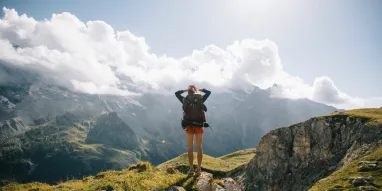
To find “ready-to-hike” multi-day hike ideas:
- The printed guidebooks from the French Hiking Federation (Fédération Française de la Randonnée), particularly the guides for La Vanoise and the Haute Tarentaise;
- Websites specializing in hiking guides, such as Altituderando.com or Rando.vanoise.com;
- The Vanoise National Park website ( where you’ll find, among other things, the guidebook for the Tour de la Vallaisonnay).
To study your route in detail and get lost in the contour lines:
- Good old-fashioned IGN paper maps (for the sheer joy of spreading them out on the living room floor… and because they can save your life on a hike when your phone runs out of battery!). In particular, maps No. 3532ET (Les Arcs – La Plagne), 3534OT (Les Trois Vallées), and 3633ET (Tignes – Val d’Isère), which cover numerous hikes starting from La Plagne and Champagny-en-Vanoise;
- The Géoportail.gouv.frwebsite (the online equivalent of IGN maps) and the Iphigénie mobile app.
To book accommodations (overnight stays in mountain huts, camping sites):
- The Vanoise National Park website to find all the mountain huts in the park, as well as information on responsible camping;
- The websites of the mountain huts around La Plagne, Versant du Soleil, and Champagny-en-Vanoise (see the complete list here).
To get tips on hiking, camping, food, and more…
- YouTube! Lose yourself in the many channels dedicated to backpacking and the outdoors: you’ll find practical tips tested and proven by passionate hikers. Start with broad searches (“hiking in the Vanoise”) and then narrow them down as you explore (“best backpack for backpacking,” “how to wash while backpacking,” “packing food for a 4-day hike ,” etc.). The only risk: you might end up completely hooked on backpacking yourself…
Preparing Physically & Mentally for Backpacking
To ensure backpacking remains a pleasure, there’s nothing like taking the time to prepare physically and mentally several weeks before your big departure.
To feel physically ready:
- Walk, of course. Start small if you’re not used to it, with two- or three-hour walks that don’t involve much elevation gain; then gradually increase the distance, elevation gain, and weight of your backpack.
You can even hike for two or three days in a row (with a night at home in a real bed between hikes) to test your fitness in comfortable conditions before the big day; - Think about strength training to build muscle in your thighs, back, and abs (that’s right! Hiking also involves lifting weights in the gym);
- Adopt a stretching routine that you can continue during your backpacking trip (your back and thighs will thank you).
To stay mentally prepared:
- Practice walking… even when it’s raining! At least you’ll know how to handle it if the weather ever takes a turn for the worse during your backpacking trip;
- Put together a mental “toolkit” to draw on when needed: breathing exercises, grounding techniques, positive affirmations… or a song that makes you smile no matter what!
- If you plan to camp: sleep in your tent at least once in a safe environment to put your mind at ease and test your gear and your evening routine (at a campground, in a yard…).
Preparing for Your Hike: A Complete Checklist
Here are 5 essential points to keep in mind to properly prepare for your first backpacking trip in the Alps:
- Plan your route by considering the total effort ( distance + elevation gain), not just the distance you’ll cover on each leg. Add one or two days to your itinerary if needed so you can enjoy your hike without pushing yourself too hard;
- Test your gear before you leave: “break in” your hiking boots, adjust the weight of your backpack (ideally: no more than 20% of your body weight, including water), and set up and take down your tent several times (if you choose to camp at the base of mountain huts instead of sleeping in a dormitory);
- Book your nights at mountain huts ( or camping spots) several weeks in advance, especially if you’re traveling in a group between mid-July and mid-August;
- Develop a meal plan: half-board at the mountain huts? A picnic box to be filled by the hut keepers for lunch? Complete self-sufficiency with “dry” food (e.g., freeze-dried meals) and a camping stove plus gas?
- Remember that backpacking should be fun above all else! Preparation is important, but once you set foot on the first trail, you also need to know how to let go, enjoy the view, and laugh with your fellow hikers (whether in good times or bad!).
Have a great hike, and enjoy some self-reflection!
A little more reading?
Most-read articles to continue reading


